Handcrafted Leather Goods
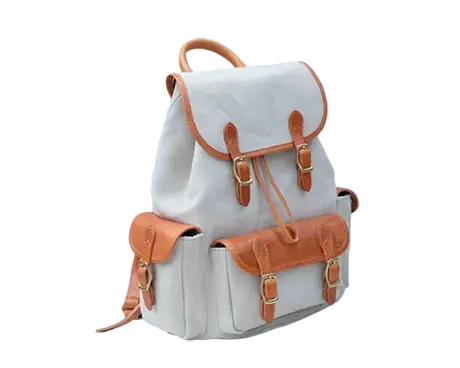
Canvas Leather Mixed
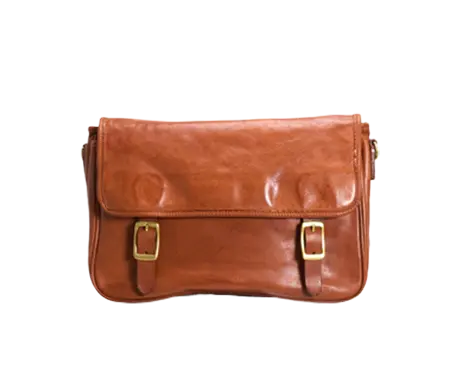
Crossbody Bags

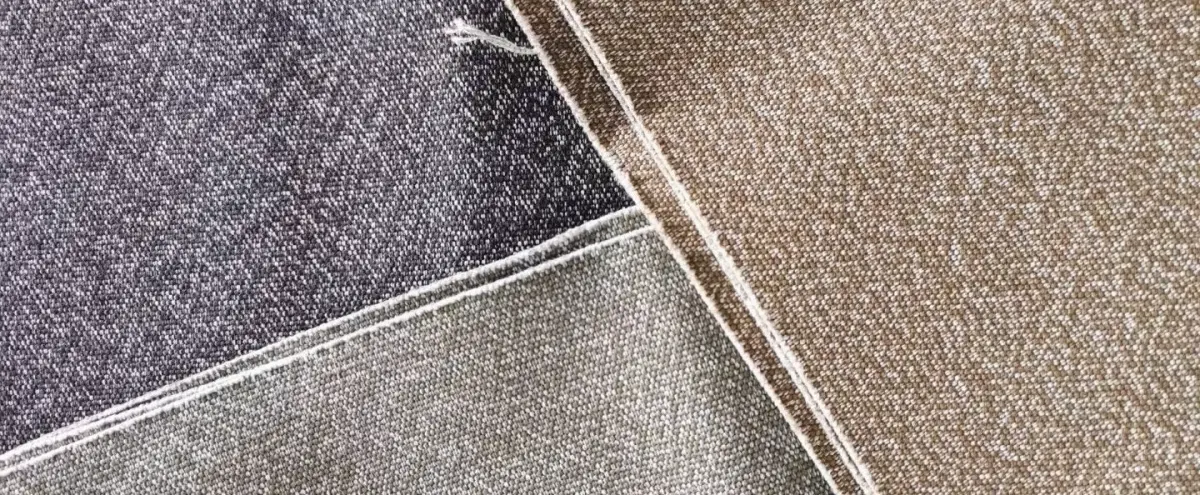
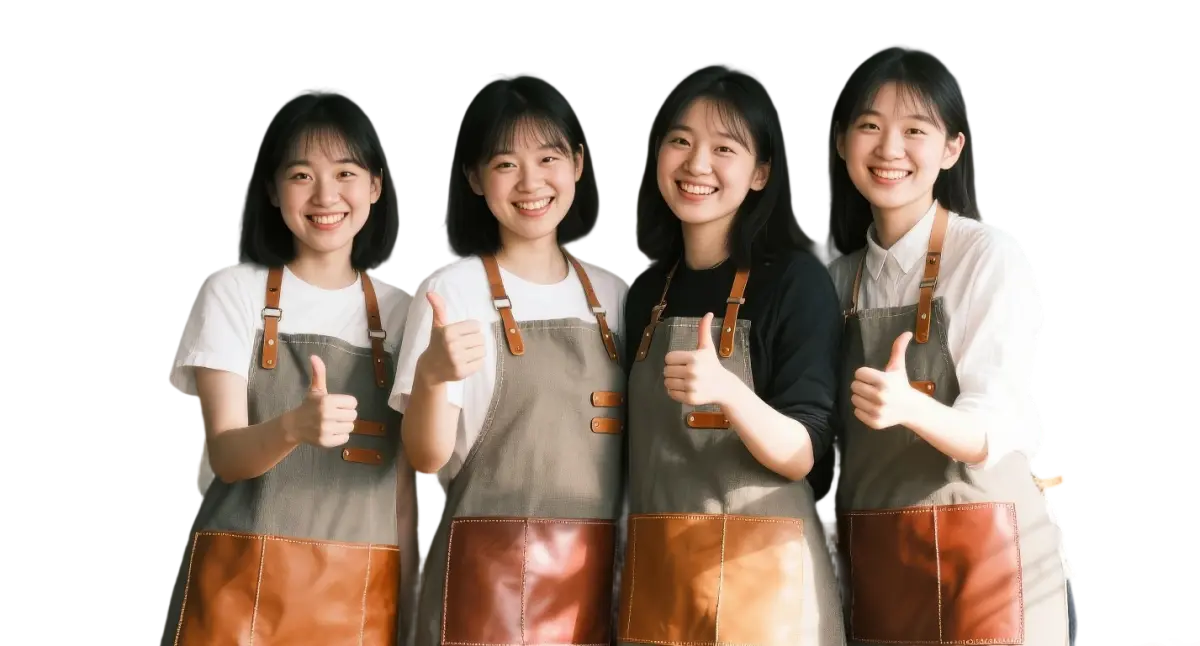
Stitching Moments, Weaving Dreams—The Texture of Youth in Handcrafted Patchwork.
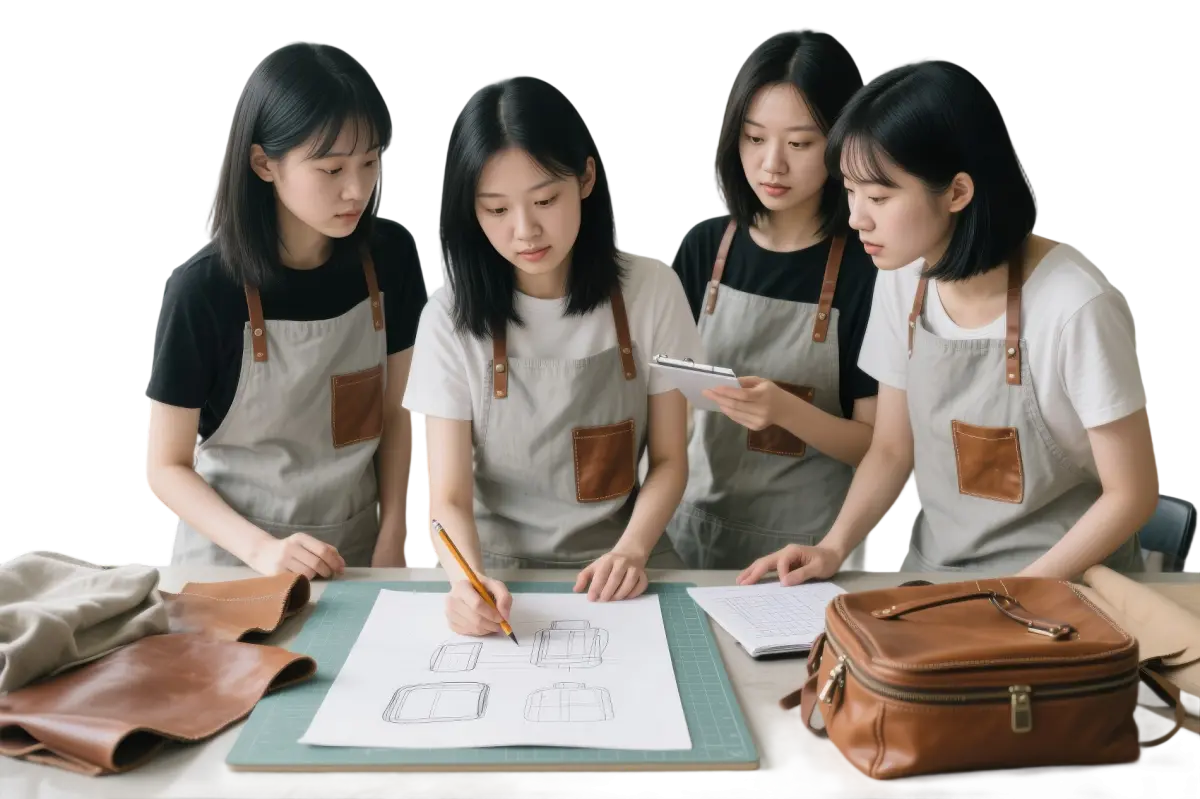
In the first month after entering the studio, our senior apprentice called the four of us newly graduated girls over, pointing to the pile of old aprons frayed at the edges in the corner. “Let’s get everyone new aprons—they need to be durable and look good. This is your first task,” he said.
Determined to “do it the best,” we picked the thickest vegetable-tanned leather from the warehouse. On the day we finished the first sample, the stitches were so dense you could count them, and the edges were polished repeatedly with beeswax. When we dropped it on the floor, it thudded—no doubt about its sturdiness. But when we put it on, something felt off. My junior sister bent down to pick up a leather cutter, and the apron’s hem dragged her off balance; when I raised my hand to punch holes, my shoulders felt like they were carrying a brick, aching too much to lift after less than half an hour. “This isn’t workwear—it’s like a weight-training gear,” she frowned, tugging at the apron strings. That made us huddle around the workbench for an urgent brainstorm.
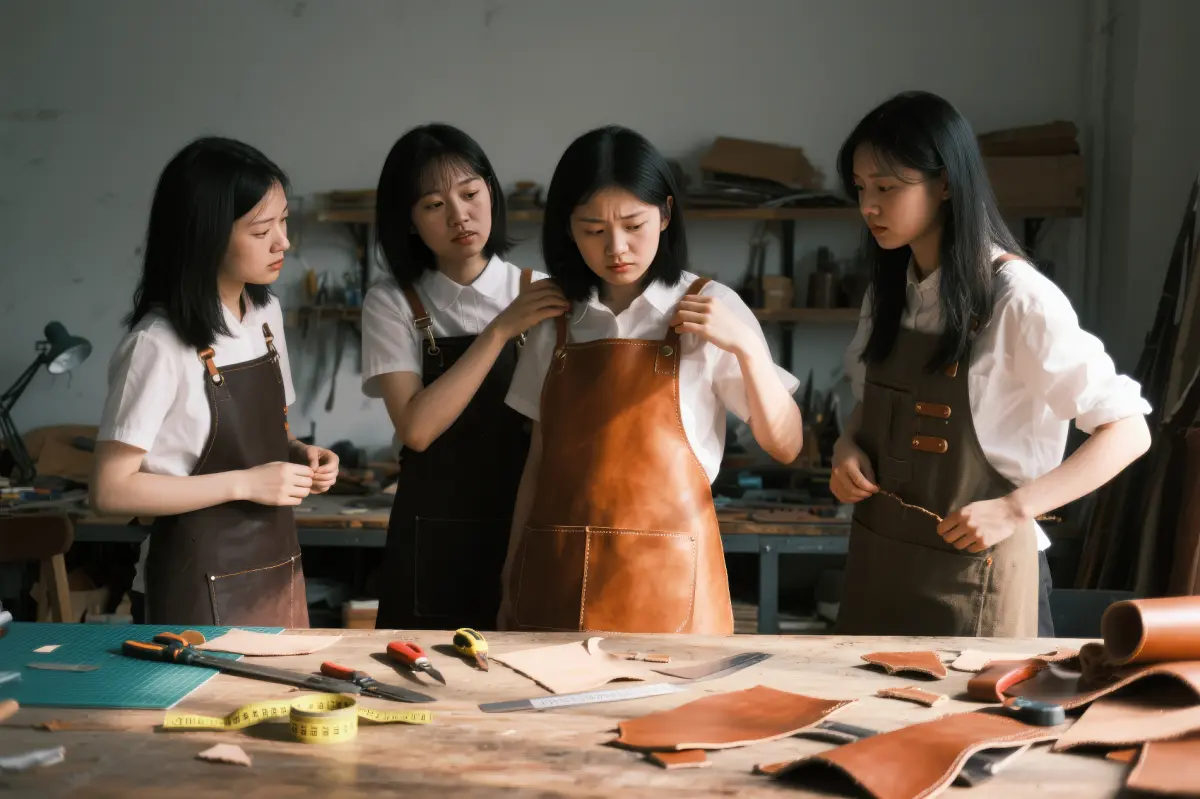
Someone pulled out a denim sample and said, “This one’s light.” Another pointed to scraps of vegetable-tanned leather, reluctant to set them aside: “But this has such great texture.”
Then our senior sister apprentice grabbed a piece of canvas, laid it over the leather, and said, “Use canvas for the main body to cut down on weight, and patch high-wear areas like the elbows and pockets with leather—look at these seams where they join, how sturdy they are!”
We cut seven pieces of fabric, tested different ways of joining them, and finally settled on a plan: canvas for the main body, leather for durability and texture, all reinforced with double lockstitching.
When the second version of the apron hung on the wall, our senior apprentice brother twisted the texture of the stitched joint and laughed out loud: “That mind works fast! It not only keeps durability intact but also exudes a clever touch.”
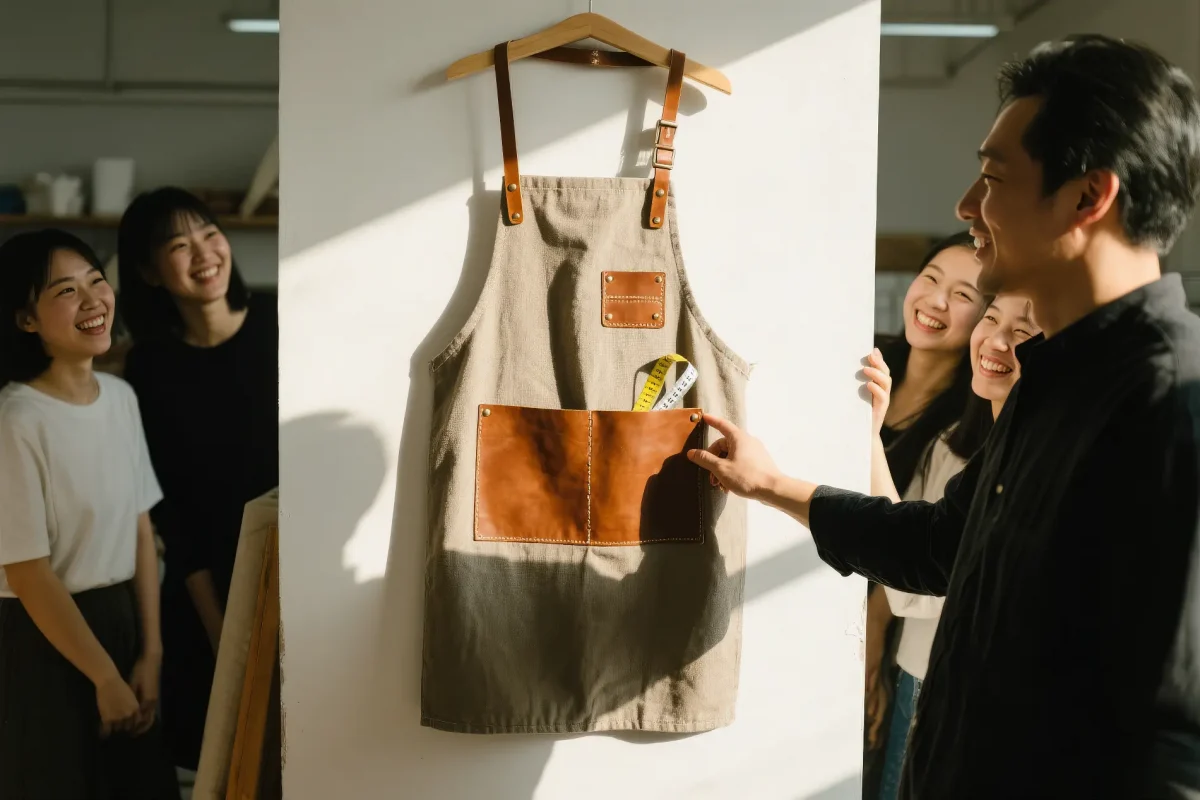
Later, he’d always pull us to study during lunch breaks: “If we adjust this craft, would it make the side pockets of tote bags stiffer and more structured?”
He took us all over fabric markets to pick canvas density, taught us to calculate the stress angles of leather joints. Now those bags, with the ruggedness of canvas and the warmth of leather, have become bestsellers that customers specifically ask for.
Every time I see “canvas-leather patchwork” on the tags while packing, I remember our senior’s words: “Nail the first task, and the rest will go smoothly.” The confidence we gained from that apron hides so many hurdles he guided us through, step by step.
Later, we decided to develop a crossbody bag, thinking it’d be convenient for commuters.
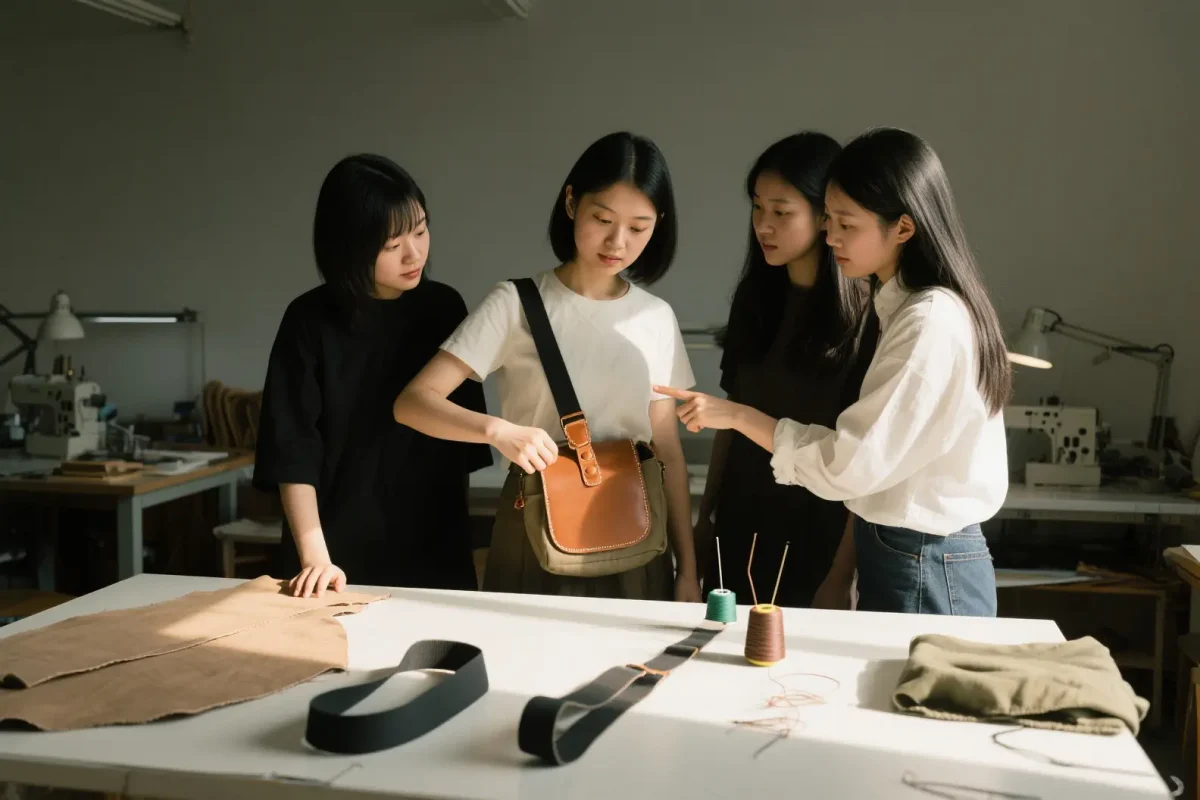
At first, we followed the apron’s patchwork logic, but found the crossbody strap—made only of canvas—lacked stiffness and kept slipping. Our senior watched us puzzling over the sample, then handed over a scrap of vegetable-tanned leather:
“Try embedding a leather core in the strap?”
We gave it a go. The leather core supported the canvas’s softness without the heaviness of full leather, so even carrying it all day didn’t chafe the shoulders. A customer feedback: “It fits a laptop and doesn’t bounce around,” and orders jumped by 30%.
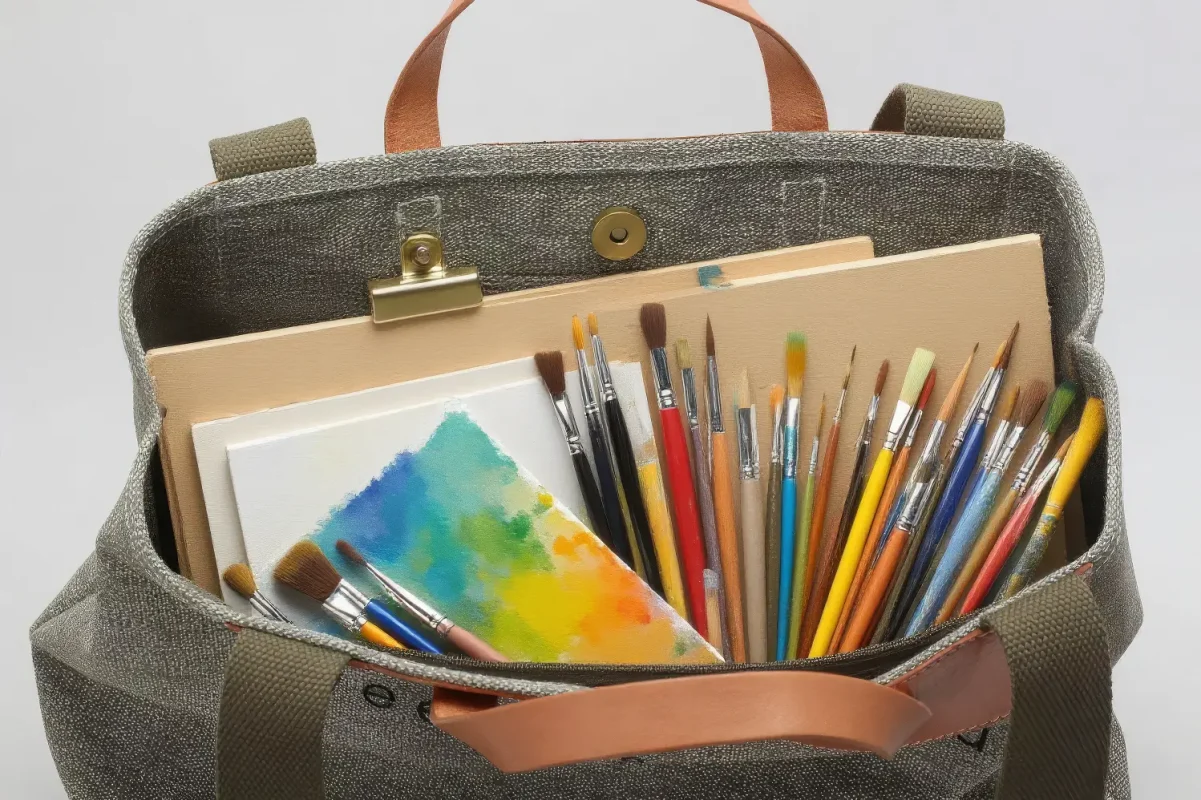
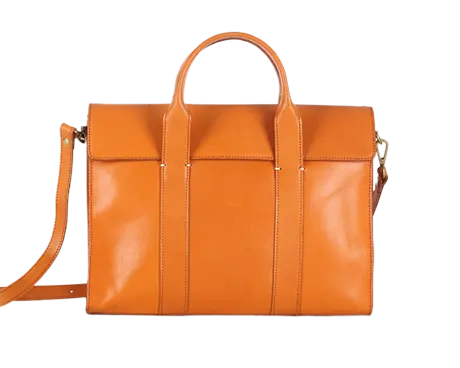
The tote bag’s development was even more fun. We wanted a large-capacity one that could hold a sketchpad, but canvas was too soft—it sagged when loaded with more stuff.
Our senior sister stared at the old wooden crate in the studio and suddenly had an idea:
“What if we patch a stiff piece of vegetable-tanned leather on the bag’s bottom as a base?”
We cut the leather into a square the same size as the bag’s bottom, sewed it to the canvas lining with double threads, and added triangular leather reinforcements at the base of the handles. The finished sample stood steady on the floor.
Our senior carried it halfway down the street, came back, and laughed: “This bag can double as a small suitcase.” Now, this tote is a favorite among art students.
Someone posted a photo saying, “The leather corners develop a patina after wear—even more charming than when I first bought it.”
Now, on the sample shelf by the workbench, alongside crossbody bags and totes, there’s quietly a paper pattern for a mini messenger bag, and someone even sketched a canvas-leather patchwork notebook cover.
Those patchwork seams that once shined only on aprons are now growing along more diverse lines.
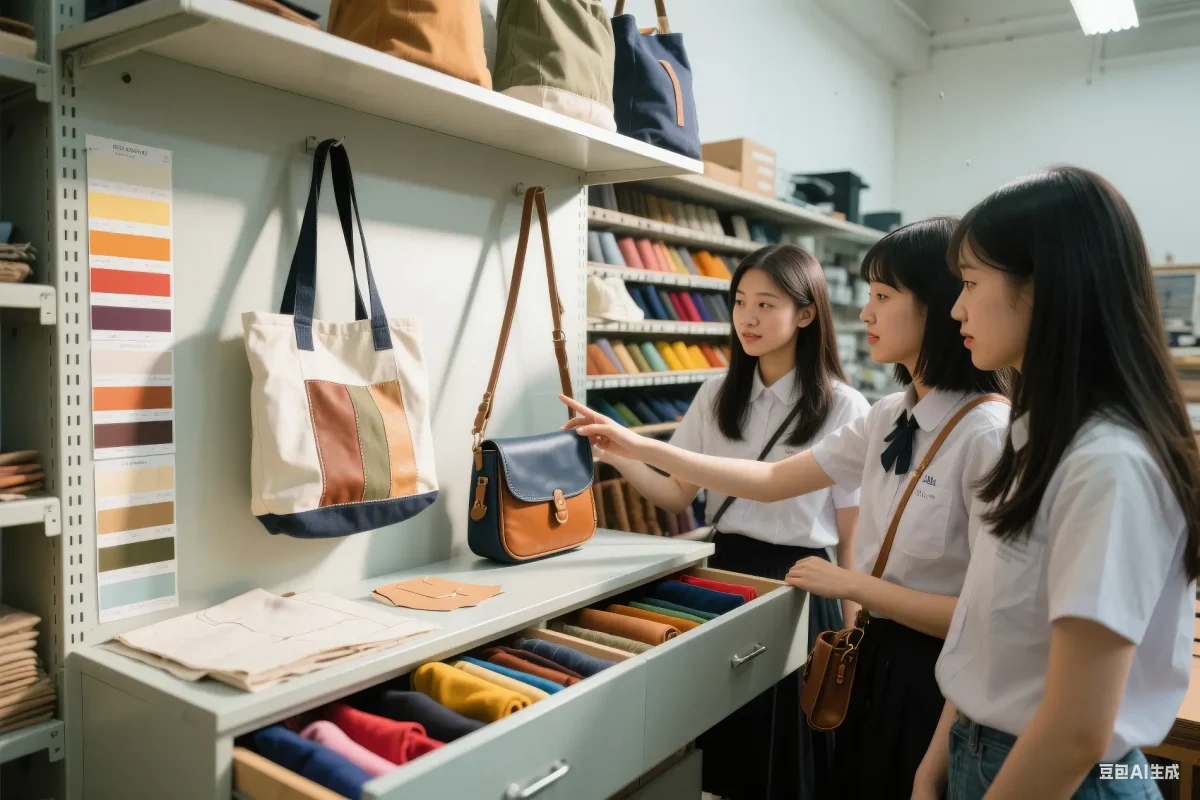
New graduates often visit the studio, pointing at samples and asking,
“Can you teach this technique?”
We always smile and open the material drawer—just like our senior handed us the first piece of canvas back then—passing on the ingenuity of patchwork.
Maybe soon, there will be more unfamiliar but earnest faces by the workbench, and the clatter of canvas meeting leather will mix with more young laughter.
After all, fine craftsmanship is never a solo creation.
Like the sturdiest patchwork quilt, it takes piece after piece stitched together to cover the long road ahead.